
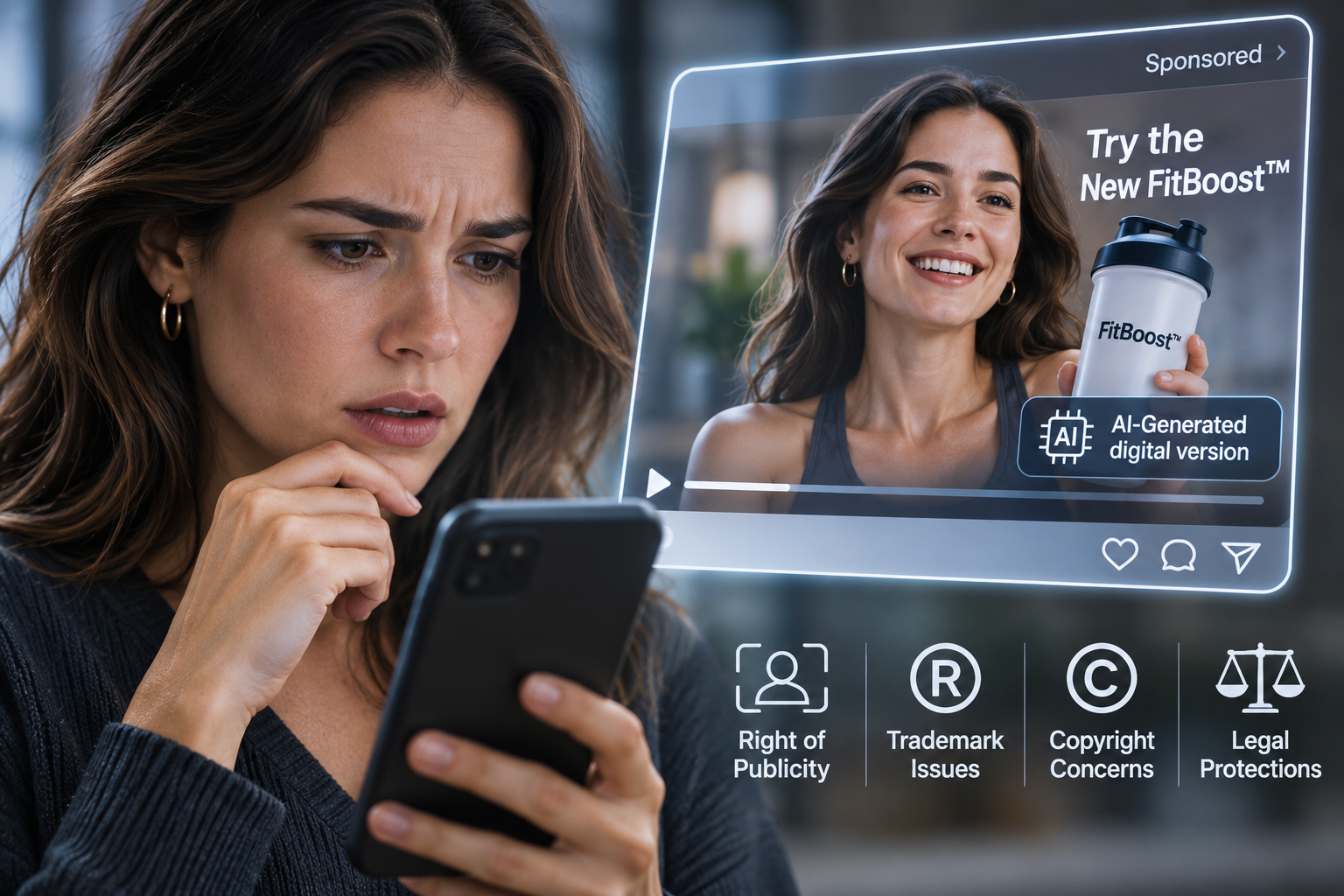
Imagine scrolling through social media and suddenly seeing an advertisement featuring your face, your voice, and even your personality, promoting a product you have never used. The catch? You never agreed to participate in the advertisement. With artificial intelligence (AI) becoming increasingly sophisticated, creating realistic digital versions of real people is easier than ever. From AI-generated celebrity endorsements to deepfake videos circulating online, the unauthorized use of someone’s identity is becoming a growing intellectual property concern. But can someone legally create an AI version of you without your permission? The answer depends on how your likeness is created, used, and protected under applicable laws.
One of the biggest legal concerns surrounding AI-generated likenesses is the right of publicity, which generally protects individuals from unauthorized commercial use of their name, image, voice, and other recognizable aspects of their identity. For example, imagine a company using an AI-generated version of a famous actor to promote its latest product without obtaining permission. Even if the advertisement never explicitly claims the actor endorsed the product, viewers might reasonably believe they did. This can create potential legal issues involving the right of publicity, false endorsement, and trademark law. Celebrities are not the only ones affected. Entrepreneurs, influencers, business owners, and everyday individuals may also face situations where someone uses their digital likeness to generate attention, promote products, or make money without authorization. Real-world examples demonstrate just how serious these concerns have become. In 2023, an AI-generated song featuring artificial versions of Drake and The Weeknd went viral, raising questions about voice imitation, copyright, and the unauthorized use of recognizable artists’ identities. Similarly, actor Tom Hanks publicly warned his followers after an AI-generated version of him appeared in an advertisement for a dental plan without his permission. These situations highlight an important distinction: AI technology can imitate someone’s appearance or voice, but that does not automatically give the creator permission to commercially exploit that person’s identity. As AI tools become more advanced, individuals and businesses must understand the legal risks associated with digital replicas, deepfakes, and AI-generated endorsements.
So, what can you do if someone creates an AI version of you without permission? Depending on the circumstances and applicable state and federal laws, you may have legal options under right-of-publicity statutes, trademark law, copyright law, or other legal protections. For example, if a company uses your AI-generated likeness in a commercial advertisement, you may be able to challenge the unauthorized commercial use of your identity. Businesses should also take precautions before using AI-generated people in marketing campaigns. Simply creating a fictional digital character that resembles a real person does not necessarily eliminate legal liability. Obtaining appropriate permissions, reviewing licensing agreements, and establishing clear restrictions on how digital likenesses can be used are important steps toward avoiding costly intellectual property disputes. California, in particular, has enacted laws addressing unauthorized digital replicas in certain circumstances, making it especially important for individuals and businesses operating in the state to understand their rights and responsibilities.
Your Identity Should Not Become Someone Else’s AI Marketing Asset
Artificial intelligence is making it increasingly easy to recreate a person’s face, voice, mannerisms, and other recognizable characteristics. But the ability to generate a convincing digital replica does not automatically create the legal right to use that identity commercially. Depending on the circumstances, unauthorized AI-generated likenesses may raise issues involving rights of publicity, false endorsement, trademark law, contracts, and other developing legal protections.
For athletes, entertainers, influencers, entrepreneurs, and other individuals whose identity has commercial value, protecting a name, image, likeness, and voice should increasingly be viewed as part of a broader intellectual property strategy. That can include carefully drafted endorsement and licensing agreements, appropriate trademark protection, monitoring for unauthorized uses, and clear contractual restrictions addressing AI-generated replicas, voice cloning, and future digital uses. Businesses using AI in advertising should take the same issues seriously by confirming that they have the necessary rights before incorporating a recognizable person’s identity into commercial content.
At Omni Legal Group, our Los Angeles intellectual property attorneys advise individuals and businesses on NIL rights, rights of publicity, trademarks, licensing agreements, unauthorized endorsements, AI-generated content, and emerging digital identity issues. We help clients evaluate how their identity or branding is being used, understand the legal protections that may apply, and develop strategies for protecting valuable personal and commercial rights as technology continues to evolve.
AI can recreate what you look and sound like in seconds, but that does not mean someone else should automatically be able to turn your identity into a commercial asset.
Contact Omni Legal Group today to schedule a confidential strategy session with one of our IP lawyers in Los Angeles. Call 855.433.2226 to discuss AI-generated likenesses, voice cloning, digital replicas, NIL rights, unauthorized endorsements, or strategies for protecting your identity from commercial misuse.